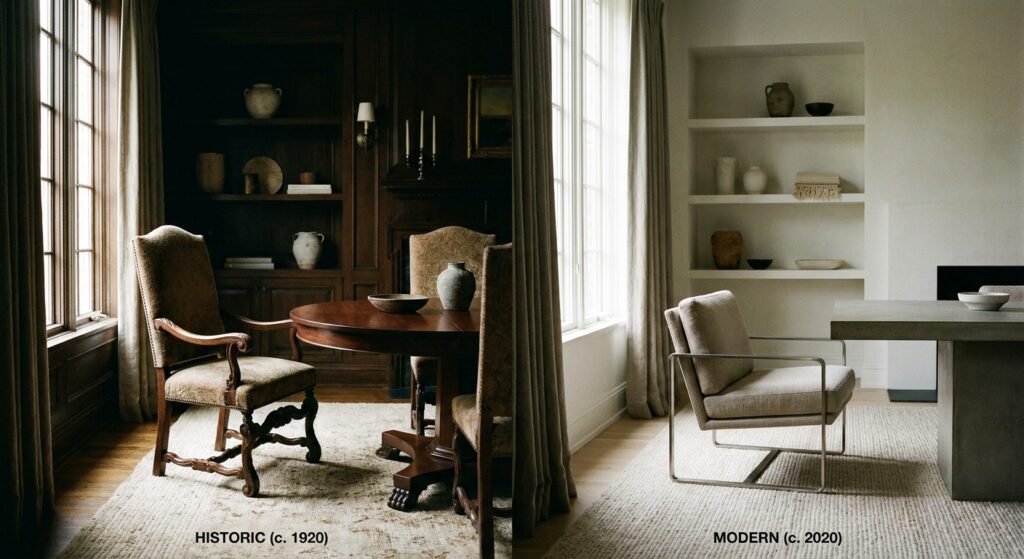
Buyers seeking formal dining room seating must understand how architectural ceiling heights and room volumes directly dictated chair dimensions across different centuries. Evaluating historical and contemporary seating requires analyzing seat heights, backrest angles, and material composition. For buyers exploring extensive category depth in traditional European designs, Modenese Furniture offers a comprehensive selection of luxury furniture. The following sections detail specific dimensional shifts from 18th-century European designs to 20th-century modernism.
How historic dining chair dimensions accommodated 18th-century room scales
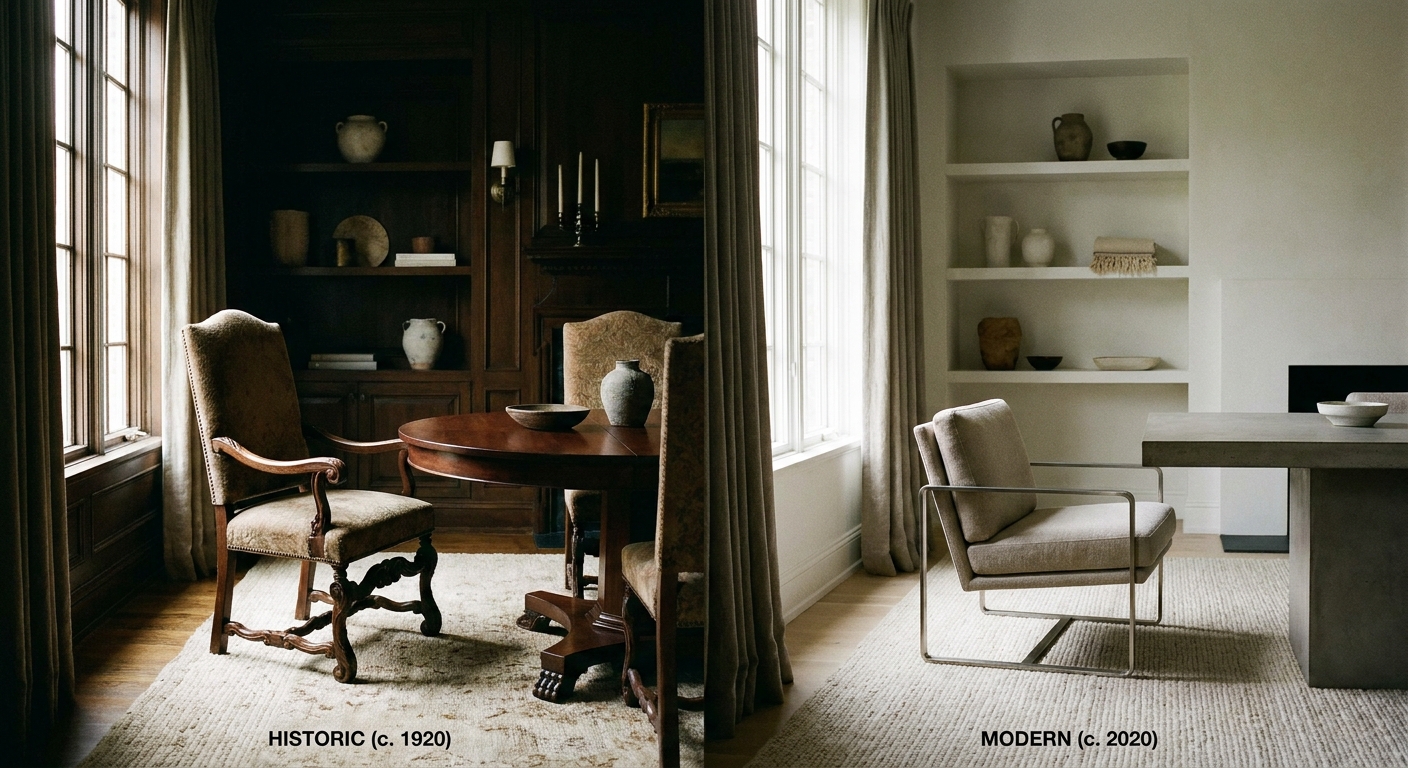
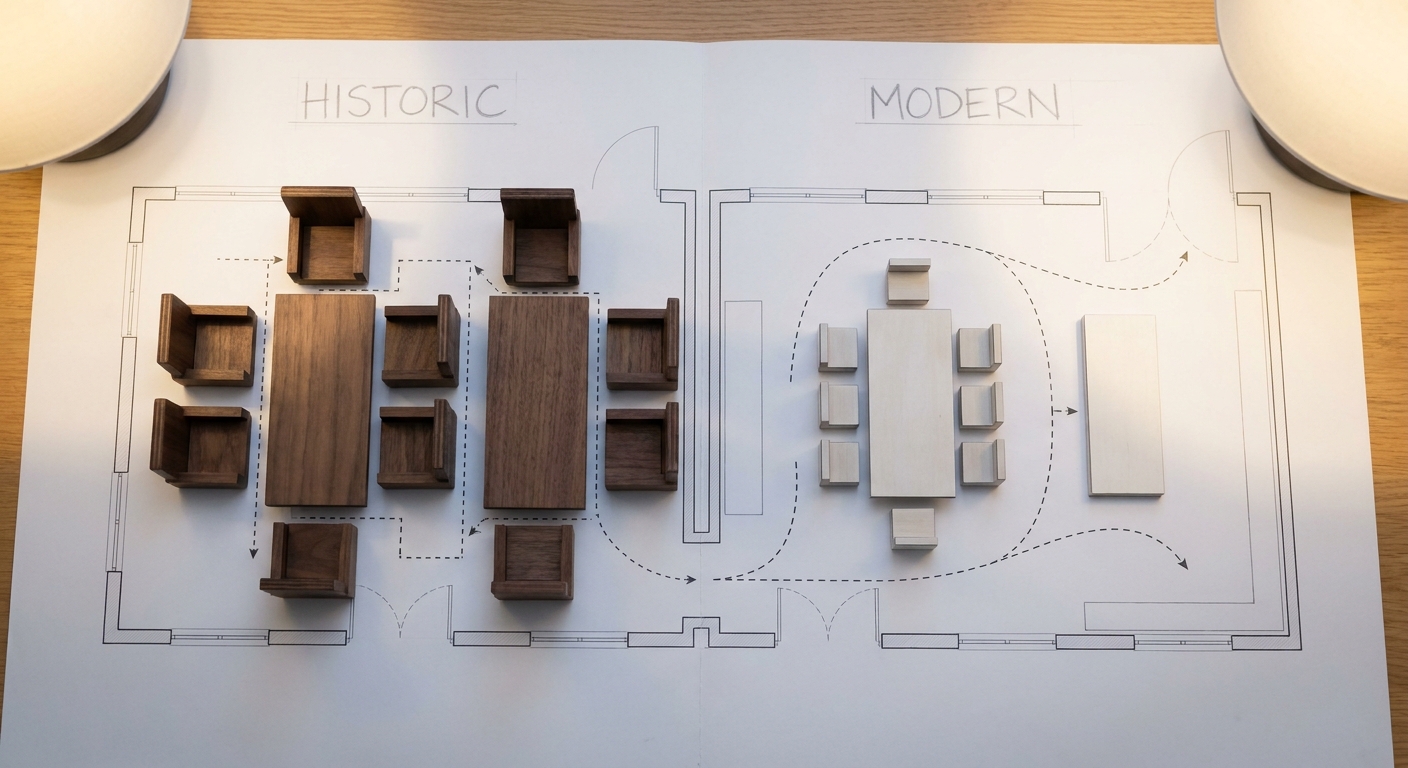
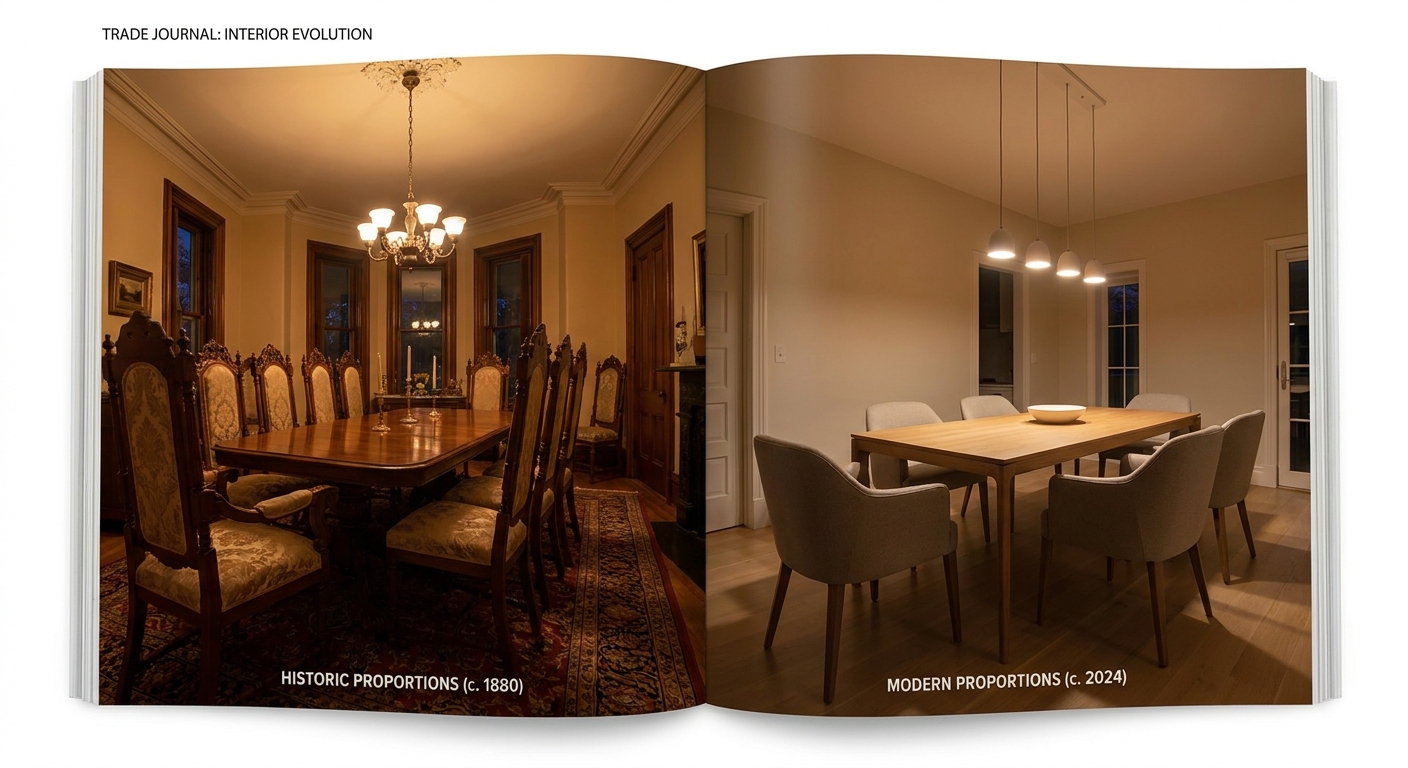
18th-century European dining chairs featured elongated backrests measuring between 40 and 45 inches tall to visually balance the 12-foot to 14-foot ceiling heights common in formal aristocratic dining rooms, ensuring that carved mahogany furniture maintained visual prominence against expansive plaster walls and elaborate wooden wainscoting.
The Encyclopedia Britannica places Rococo decorative arts in 18th-century Europe and identifies asymmetry, curves, and shell-like ornament as recurring features. Craftsmen carving Rococo dining chairs shaped dense mahogany and walnut to support complex pierced splats and cabriole legs. Seat heights during the 1700s typically measured 17 to 18 inches from the floor to accommodate thick horsehair upholstery cushions. The Encyclopedia Britannica documents how Rococo furniture makers integrated organic curves into structural chair frames to soften the rigid geometry found inside formal dining spaces.
How modern architectural shifts altered 20th-century dining furniture proportions
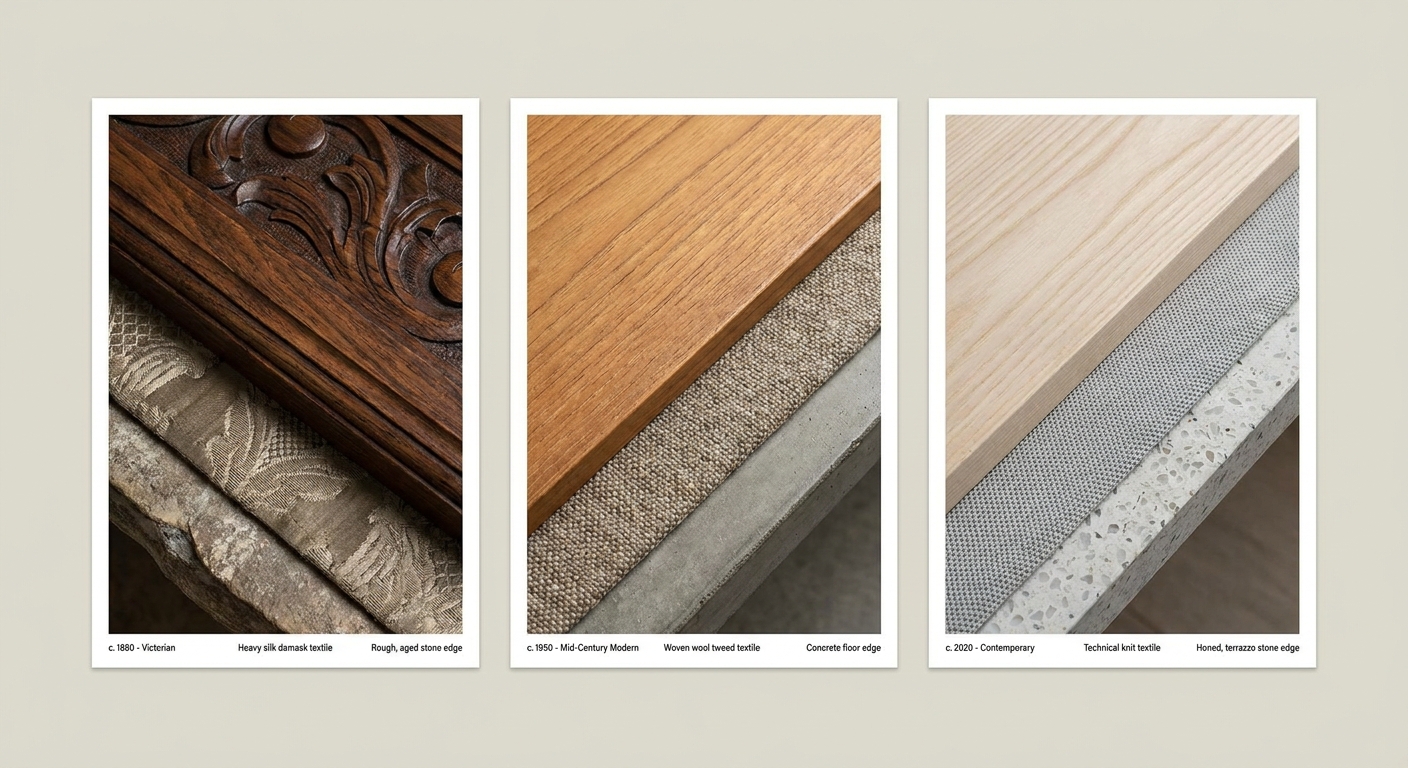
20th-century modern dining chairs adopted lower backrest profiles measuring 30 to 36 inches tall because residential architects reduced standard room ceiling heights to 8 or 9 feet, prompting industrial designers to prioritize horizontal lines and compact footprints to maximize spatial efficiency within smaller open-concept modern dining areas.
The Victoria and Albert Museum describes Art Deco as an international style that spread during the 1920s and 1930s across architecture, interiors, furniture, and industrial design. Modernist designers replaced heavy carved wood with tubular steel, bent plywood, and molded fiberglass to reduce overall chair weight by up to 40 percent compared to 18th-century antiques. The Victoria and Albert Museum notes that Art Deco practitioners embraced geometric simplicity and synthetic materials. Seat heights remained relatively stable at 18 inches, but seat depths expanded to 19 or 20 inches to encourage relaxed, reclined postures rather than the rigid upright seating required by historic formal etiquette.
Material specifications comparing historic and modern dining chairs
Evaluating structural components reveals distinct manufacturing differences between historic and modern dining furniture production methods.
- 18th-Century Construction: Craftsmen relied on solid hardwood joinery, applying mortise and tenon techniques to secure heavy mahogany frames.
- 20th-Century Construction: Manufacturers introduced extruded metals and molded plastics, allowing factories to mass-produce lightweight cantilevered chair bases.
| Design Period | Average Back Height | Primary Frame Materials | Typical Ceiling Height |
|---|---|---|---|
| 18th-Century Rococo | 40 to 45 inches | Carved mahogany, solid walnut | 12 to 14 feet |
| 1920s and 1930s Art Deco | 30 to 36 inches | Tubular steel, bentwood, chrome | 8 to 9 feet |
How preservation standards guide historic dining room furniture conservation
Professional conservators apply strict material guidelines to stabilize 18th-century dining chairs without destroying original wood finishes or historic horsehair upholstery layers, prioritizing reversible treatments and climate control systems to prevent antique mahogany frames from cracking under modern indoor heating conditions while maintaining structural integrity for future generations.
The National Park Service preservation briefs provide source-backed guidance for historic wood, plaster, and paint conservation in buildings under documented preservation conditions. The National Park Service outlines specific humidity parameters, recommending museums and collectors maintain relative humidity between 45 and 55 percent to protect historic furniture joints. Conservators repairing formal dining chairs from the 1700s use traditional hide glues rather than modern synthetic epoxies to ensure future specialists can reverse the repairs. Maintaining original proportions during restoration requires precise measurement verification against surviving historical pattern books.
Related reading on this site
Readers comparing planning rules can also review Illuminated Modern Planters – Latest Fad In Gardening And Interior Designing for adjacent context on the same site.
Material and proportion decisions connect closely with 5 Modern Design Concepts For Your Space, which gives readers another local reference point.
Project research can continue with Furniture Trends, Interior Design And More: The Modern Look when the next question concerns a neighboring design topic.