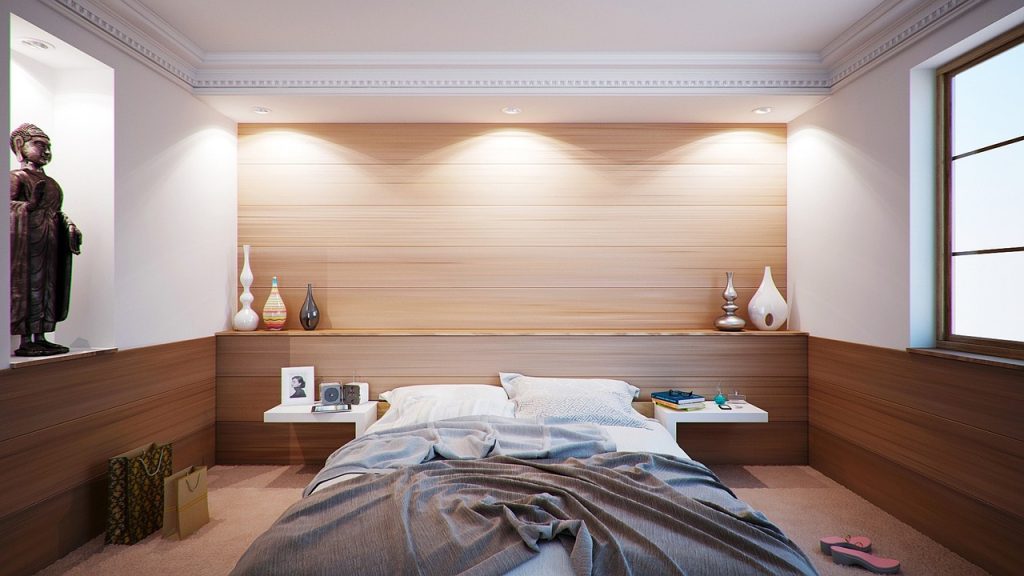
Can bedroom furniture still work after the bed is made, drawers are open, closet doors swing, and someone walks through the remaining aisle? Catalog dimensions describe furniture at rest; bedroom layouts fail when those pieces have to operate.
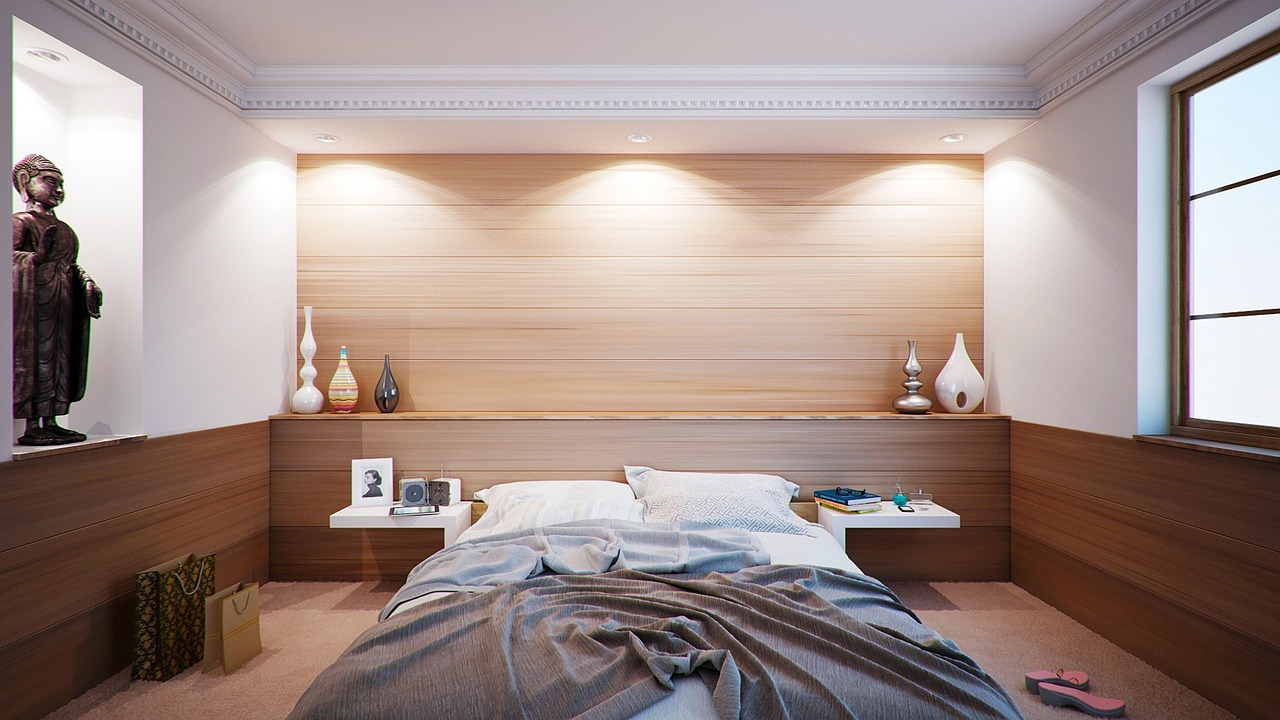
Stock visual reference from Pixabay by keresi72.
The furniture in bedroom layouts must be tested open, occupied, and in use before purchase
Approve bedroom furniture only after testing each piece closed, open, occupied, and reachable. The goal is a room that works after delivery, not just a balanced plan.
Closed furniture dimensions are only the starting point for a bedroom layout
| Item | Closed footprint | Operating footprint | Failure to test |
|---|---|---|---|
| Bed | Frame width and length | Bedding, making space, foot traffic | Blocked aisle |
| Nightstand | Width, depth, height | Drawer pull, lamp, outlet reach | Unusable plugs |
| Dresser | Case depth | Drawer extension plus standing room | Drawers hit bed |
| Wardrobe | Cabinet depth | Door swing or sliding access | Clothes cannot be reached |
| Bench or chair | Seat size | Knees, sitting zone, circulation | Decor becomes obstruction |
Retailer dimensions usually list width, depth, and height. They do not show a person standing at the dresser, bedding swelling past the mattress, or a nightstand blocking a plug.
The first decision is whether the room needs comfort clearance or minimum clearance
Comfort clearance commonly means 30 to 36 in (760 to 915 mm) of walking space. A tight bedroom may accept about 24 in (610 mm) only where use is simple. Accessibility needs a separate brief: ADA.gov describes mobility disabilities as including people who use wheelchairs, scooters, walkers, crutches, or no device, and the UDS Foundation cautions that accessible bedrooms should be individualized. Near exterior walls or damp closets, leave inspection access because the EPA advises fixing wet or damp spots promptly.
Bed size and bed-frame construction decide most bedroom clearance conflicts
Select the bed after mapping side access, foot access, door swing, storage operation, and delivery constraints.
A mattress size chart is not enough because frames add depth and width
Standard U.S. mattress sizes start with these rectangles: twin 38 by 75 in (965 by 1,905 mm), twin XL 38 by 80 in (965 by 2,030 mm), full 54 by 75 in (1,370 by 1,905 mm), queen 60 by 80 in (1,525 by 2,030 mm), king 76 by 80 in (1,930 by 2,030 mm), and California king 72 by 84 in (1,830 by 2,135 mm). UK, EU, Canadian, and Australian names differ, so verify the retailer sheet.
- Low risk: slim rails or simple platforms may add 0 to 2 in (0 to 50 mm).
- Medium risk: upholstered rails, wood platforms, and thick headboards often add 2 to 6 in (50 to 150 mm).
- High risk: storage beds, sleigh beds, canopy beds, winged headboards, and footboards can add 6 to 12 in (150 to 305 mm) or more.
A bed that suits furniture trends and the modern look can still block a drawer, radiator, outlet, or closet door.
Side clearance depends on who uses the bedroom and how often the bed is made
A tight adult minimum is about 24 in (610 mm) beside the bed. A more comfortable daily clearance is 30 to 36 in (760 to 915 mm), especially for two sleepers, nightstand access, sheet changes, vacuuming, and caregiver access.
- Place one side against a wall only when use supports it, such as a child’s room, guest room, studio, or single-sleeper bedroom.
- Give two adult sleepers usable access on both sides.
- Increase clearance for a walker, wheelchair, transfer space, caregiver route, or wider turning path.
The U.S. Access Board states that ADA Accessibility Standards apply to covered public accommodations, commercial facilities, and state or local government facilities, not every private home.
Foot-of-bed clearance must include doors, benches, drawers, and traffic paths
Foot clearance often conflicts with the entry door, closet, dresser, balcony door, or bathroom door. Keep about 24 in (610 mm) as a tight pass-by, and aim for 30 to 36 in (760 to 915 mm) where someone walks daily, opens a door, or passes another person.
- Measure from the farthest bed projection, not the mattress edge.
- Add bench depth before judging the aisle.
- Draw every door at full swing.
- Reserve drawer depth plus standing room if a dresser faces the bed.
Dressers and wardrobes require clearance for the open position, not the showroom position
Measure storage from the wall to the farthest open drawer or door, then add standing space.
Drawer extension can double the working depth of a dresser
Product pages usually give closed case depth, not the working zone. Many bedroom dressers are roughly 18 to 22 in deep (460 to 560 mm). An open drawer can add another 12 to 20 in (305 to 510 mm), depending on drawer depth and slide type.
- Partial-extension drawers: save aisle space but make the back harder to reach.
- Full-extension drawers: give better access but create the largest operating footprint.
Measure the closed dresser, add open drawer projection, then add standing space. Use about 24 in (610 mm) for a tight allowance and 30 to 36 in (760 to 915 mm) where someone bends, sorts laundry, or shares the aisle.
Wardrobe door type changes the clearance rule
Freestanding wardrobes commonly land near 22 to 26 in deep (560 to 660 mm). Shallow cabinets suit folded items, shoes, or linens better than coats and dresses.
- Hinged doors: need door-width swing clearance plus room for the user.
- Sliding doors: save swing space, but only part of the wardrobe opens at once.
- Bifold doors: reduce the swing arc but still project into the room.
- Open closet systems: remove door conflict but expose visual clutter.
A dresser across from the bed needs a two-part clearance check
First, check the closed aisle between bed frame and dresser front. About 30 in (760 mm) works for ordinary passage, while 24 in (610 mm) is tight for low-use rooms. Second, check the open-drawer condition with a person standing there. Armoires also need door swing plus internal drawer clearance.
Nightstands, doors, outlets, windows, and egress decide whether a bedroom layout is usable
Protect reach, door operation, power, window access, and safety routes before styling the room.
Nightstand placement should follow mattress height, reach, and electrical access
Set nightstands after bed height is known. Platform beds often place the mattress top around 18 to 24 in (460 to 610 mm), while box spring beds and adjustable bases often finish closer to 24 to 30 in (610 to 760 mm), depending on mattress thickness and legs.
A practical nightstand top should sit roughly level with the mattress, or within about 2 to 4 in (50 to 100 mm) above or below. Typical nightstands run 18 to 30 in (460 to 760 mm) wide and 16 to 20 in (405 to 510 mm) deep.
Draw outlet access before ordering. Keep plugs reachable for lamps, phone charging, adjustable bases, and medical devices where needed. Coordinate bedside lamps with windows and ceiling fixtures, as in designing a room with light and color.
Bedroom doors and closet doors must be drawn at full swing on the plan
Draw every door open. A common interior door may be 24 to 36 in (610 to 915 mm) wide, and the swing arc needs the same radius as the slab. A bed can fit on paper while the entry door hits a nightstand, bench, or projecting frame.
Hinged closet doors need full swing clearance. Bifold doors project less but still need clear floor in front. Sliding doors avoid swing conflict, but half the opening is usually covered at one time. Bathroom doors inside a primary bedroom also need full operation.
Sleeping-room egress and safety conditions override bedroom decor ideas
Many jurisdictions regulate bedroom egress, emergency escape and rescue openings, smoke alarms, and access routes, but exact requirements depend on local code, building type, renovation scope, and inspection authority.
Furniture should not block required doors, operable windows used for emergency access, smoke alarms, electrical panels, heaters, radiators, HVAC registers, or serviceable outlets. If a dresser prevents a window sash from opening, the layout has failed.
Seating belongs in a bedroom only after bed and storage circulation are protected
Add seating only when the bed, storage, doors, and walking paths already work.
A bed-end bench must leave walking clearance beyond the bench
A bed-end bench adds its own depth plus the aisle in front. Many benches are about 16 to 20 in (405 to 510 mm) deep. After placing the bench, keep 24 in (610 mm) as a tight passage, with 30 to 36 in (760 to 915 mm) preferred where the bench faces a dresser, closet, wall, or door swing.
A bedroom chair needs a landing zone, light source, and route around it
A compact accent chair often measures 26 to 34 in (660 to 865 mm) wide and 28 to 36 in (710 to 915 mm) deep. Allow space to sit, stand, pull out a stool, and pass without scraping the bed or wardrobe.
Seating works in a reading corner, dressing area, senior bedroom, or guest room when there is a lamp, outlet, side surface, and clear route. Delete it where a closet door hits it or no practical light exists. Chair dimensions change function as much as style, as shown in how furniture proportions affect room use.
A bedroom layout should be approved with a measured clearance worksheet before ordering furniture
Measure fixed architecture, add real furniture dimensions, test open and occupied positions, then check delivery.
The bedroom measurement sequence should start with fixed architecture
Record wall lengths, ceiling height, slopes, alcove widths, baseboard depth, door size and swing, window width, sill height, outlets, switches, HVAC registers, radiators, closet opening, closet depth, and attached bathroom doors. In irregular rooms, measure each wall segment and note the narrowest point.
Draw the room on graph paper or in interior design software for planning a room. For accessibility-sensitive layouts, the 2010 ADA Standards for Accessible Design specify a 30 by 48 in clear floor or ground space for wheelchair positioning in covered accessible design conditions, which is a reference point rather than a blanket private-home rule.
Retailer specification sheets should be checked before cool bedroom sets are approved
Collect overall width, depth, height, packaged size, product weight, assembly requirements, drawer extension, door swing, hardware projection, slat or box-spring requirements, wall-anchoring instructions, and delivery method. Ask customer service for missing open-drawer depth or wardrobe-door clearance.
Note stair turns, elevator size, hallway width, room-entry angle, made-to-order status, restocking fees, return window, and whether the item can be returned after assembly.
Painter’s tape or cardboard templates expose clearance conflicts quickly
Test the layout at full size before ordering. Tape the closed footprint of the bed, dresser, nightstands, wardrobe, bench, or chair on the floor, then add open drawer, open door, and sitting zones with a second tape color or cardboard. Walk the route, reach the nightstand, photograph approved dimensions, and order only after the layout works closed, open, occupied, and deliverable.
FAQ
How much clearance do you need between a bed and dresser?
Use about 30 to 36 in (760 to 915 mm) for comfortable passage. If the dresser faces the bed, add drawer extension and standing space; 24 in (610 mm) is a tight minimum only for low-use conditions.
What is the 2 3 rule in furniture, and does it help with bedroom layout?
The 2 3 rule is a proportion guideline, often used to size one item relative to another. It may help visual balance, but it does not replace clearance checks for drawers, doors, walking paths, and delivery.
What is the 4 inch rule for furniture, and when is it useful in a bedroom?
A 4 in (100 mm) allowance can help account for small gaps, bedding overhang, baseboards, plugs, or hand clearance. It is useful as a buffer, not as the main aisle dimension.
What is the 60 40 rule for furniture, and is it a clearance rule or a styling rule?
The 60 40 rule is a styling and balance idea, not a clearance rule. Bedroom furniture still needs measured operating space for the bed, dresser, wardrobe, doors, outlets, and seating.
How do you arrange furniture in a small bedroom with two doors?
Draw both doors at full swing first, then place the bed where it protects the main route. Choose smaller storage, sliding or open closet systems where appropriate, and delete seating unless the remaining aisle still works.