
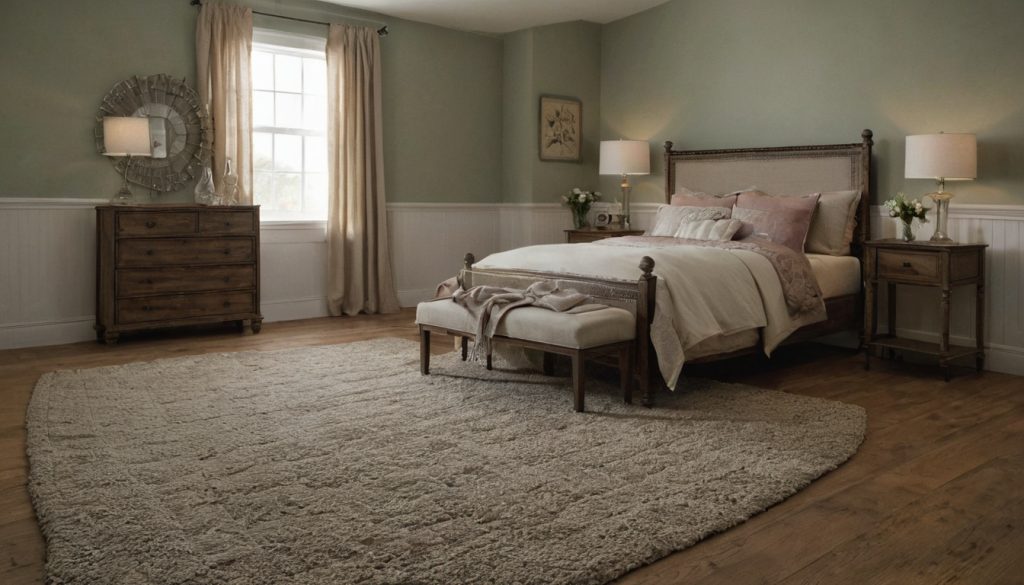
The fashionable larger rug is the wrong purchase if its bound edge catches the bedroom door. The better size is the smallest measured rectangle that gives useful bedside coverage, clears every moving part, and does not create a freight-return problem.
How should a bedroom be measured before choosing a rug size?
A bedroom rug should be sized from usable floor area, not a generic bed chart. Measure the room, subtract door and service zones, then tape out the seller’s stated actual dimensions, including any published tolerance.
Which bedroom floor areas must remain outside the rug?
- Measure wall to wall at floor level, accounting for baseboards, thresholds, closet tracks, radiators, floor registers, and fixed furniture.
- Mark the bed frame, nightstands, dresser, chair, drawer paths, and under-bed storage. Compare them with these bedroom furniture clearances for beds, dressers, and seating.
- Measure the smallest gap between every door bottom and the floor throughout the complete entry, closet, and bathroom door swing.
- Exclude areas where heating instructions prohibit covering, and preserve access for vacuuming and movable seating.
Furnishings are among the indoor sources of volatile organic compounds identified by the U.S. Environmental Protection Agency. Keep practical ventilation access in the room plan.
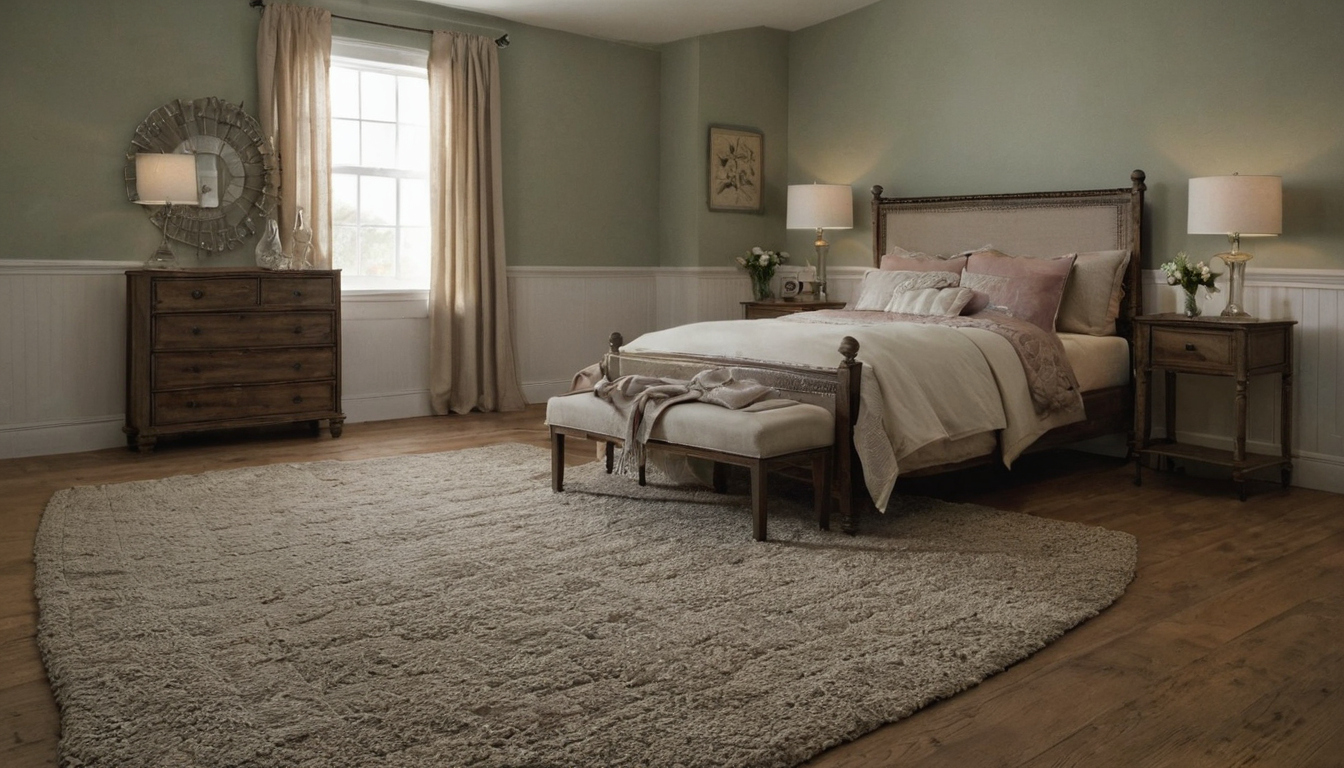
How should a bedroom be measured before choosing a rug size shown as an editorial planning reference.
How can a taped rug outline expose layout problems before purchase?
- Tape the actual listed dimensions rather than relying on the nominal size.
- Walk both sides of the bed and fully open every door, drawer, and storage compartment.
- Move the vacuum around each taped edge and reject awkward slivers of exposed flooring.
A taped outline verifies footprint, but it cannot verify pile feel, edge curl, color, or construction quality. Once the footprint passes, compare it with the actual bed frame.
Which rug sizes fit twin, full, queen, king, and California king beds?
The right size depends on the measured frame and intended placement, not mattress width alone. Calculate the exposed rug at both sides and the foot, then reject any option entering a door exclusion zone.
A bedroom rug size table should use actual bed-frame dimensions
- Twin, 38 by 75-inch mattress: screen 5 by 8 feet below the nightstand or 6 by 9 feet for greater coverage.
- Full, 54 by 75-inch mattress: screen 6 by 9 feet for partial coverage or 8 by 10 feet beneath the complete frame.
- Queen, 60 by 80-inch mattress: 8 by 10 feet commonly covers the bed; 9 by 12 feet may include nightstands.
- King, 76 by 80-inch mattress: begin the comparison at 9 by 12 feet.
- California king, 72 by 84-inch mattress: compare 9 by 12 feet against the frame’s additional length.
These are screening sizes, not decorative rules. Wide rails, upholstery, headboards, and footboards enlarge the footprint. Even a few inches can affect fit, as the National Council on Aging mattress guide observes.
Should the bedroom rug extend under the nightstands?
Include nightstand legs only when the larger rectangle clears the room. For a rug beginning below them, place its top edge ahead of the bed legs. Calculate side exposure as rug width minus frame width, divided by two. If that footprint overwhelms the room, test compact placements.
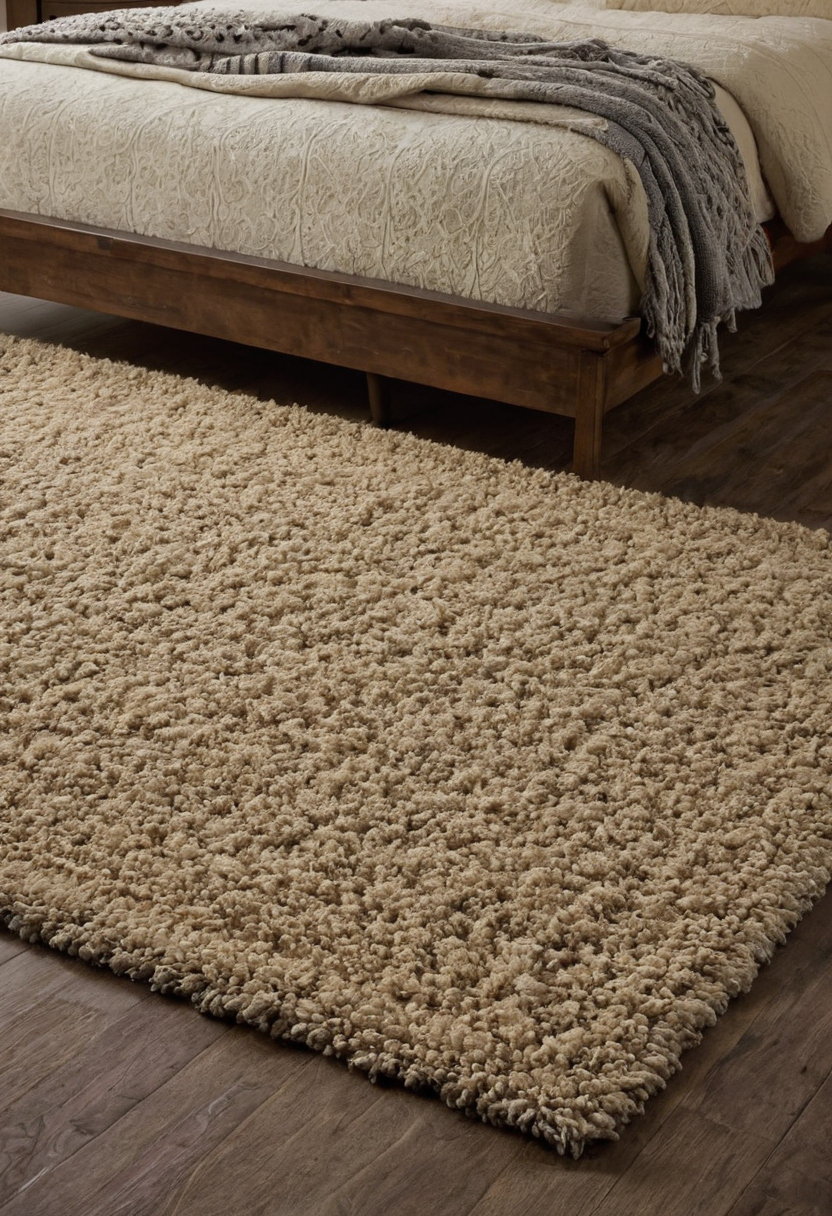
Which rug sizes fit twin, full, queen, king, and California king beds shown with practical context cues.
Which bedroom rug placements work in a small bedroom?
In a compact bedroom, choose the smallest placement that provides deliberate step-off coverage while preserving doors and cleaning routes. Broad visual coverage is room decoration, not necessarily usable coverage.
Can bedside runners replace one large bedroom rug?
Two nominal 2-by-6-foot runners may fit narrow aisles better than one 8-by-10-foot rug. Confirm actual rug and pad dimensions and trim each pad inside the rug edges. If a new rug or pad emits odor, increase ventilation as the EPA recommends for VOC-emitting products.
When does a partially under-bed rug provide enough usable coverage?
A partial rug works when both step-off points land on textile and the bed legs retain stable, manufacturer-permitted support. Keep the rug clear of drawers, vents, vacuum routes, and the entire door arc. Placement alone does not settle the purchase; installed thickness must also pass.
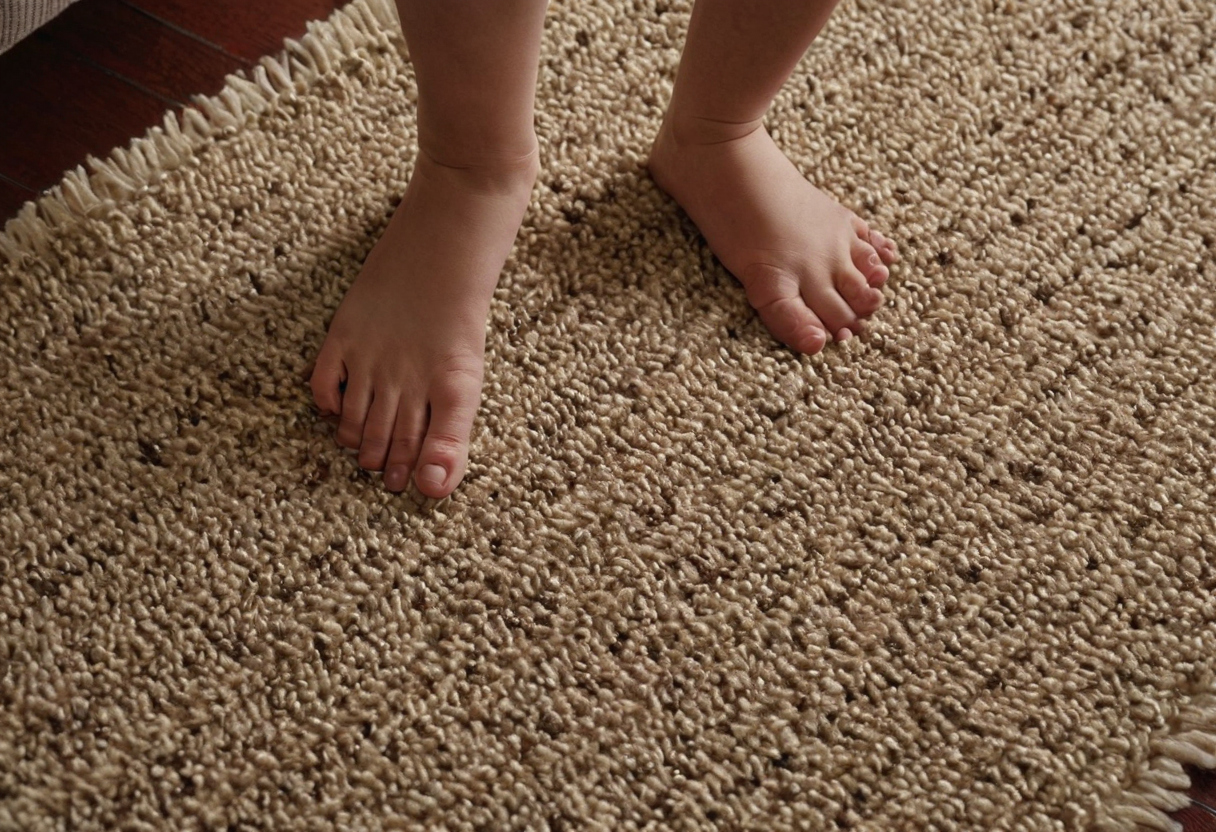
Which bedroom rug placements work in a small bedroom shown as an editorial planning reference.
A bedroom rug and pad must clear the entire door swing
A rug and pad clear a door only when their combined installed thickness remains below the smallest floor-to-door gap across the complete swing. Pile height alone is insufficient because backing, binding, corners, and pad add height.
How is combined rug-and-pad thickness calculated?
Move the door from closed to fully open, stopping at several points. Measure beneath the leading edge and both corners, then record the smallest gap. Compare that gap with total rug thickness plus uncompressed pad thickness. Count compression only when the manufacturer quantifies it.
Do low-pile rugs always fit beneath bedroom doors?
No. Binding can be thicker than the field, while sweeps, uneven floors, and curled edges reduce clearance. Test hinged and bifold doors through their complete paths and keep rugs outside sliding-door tracks. These door alignments and floor-plan sight lines also affect the usable layout.
Which rug pad specifications matter on wood, tile, laminate, and carpet?
Check pad material, thickness, disclosed density, trimming instructions, and permitted flooring. Wood, tile, laminate, carpet, and heated floors can carry different restrictions for rubber, latex, PVC, felt, dyes, and plasticizers. A generic non-slip claim does not establish compatibility.
Fiber content, construction, and care determine bedroom rug cleaning costs
Fiber content does not determine upkeep by itself. For wool, nylon, polyester, or polypropylene, check construction, backing, dye, care instructions, and warranty exclusions. Missing care specifications require a pause rather than assumptions based on fiber reputation.
Which rug specifications predict whether a vacuum can reach the floor edges?
Pile height, fringe, total rug weight, furniture placement, and vacuum-head clearance control access. Measure beside walls and the frame, then follow the rug and vacuum manufacturers’ instructions. A heavy hand-tufted rug may cost more to move than a light flatweave.
GSM and pile weight are useful only when the measurement basis is disclosed
Compare pile weight only when sellers define it identically. Total shipping weight, rug weight, pile weight, GSM, density, and thickness are not interchangeable. Construction and care costs belong in the purchase calculation.
The cheapest bedroom rug is not always the lowest-cost rug
The cheapest listing can become expensive after adding a correctly sized pad, delivery surcharges, return freight, restocking fees, and cleaning. Compare delivered cost and a five-year scenario, identifying cleaning frequency as a household assumption.
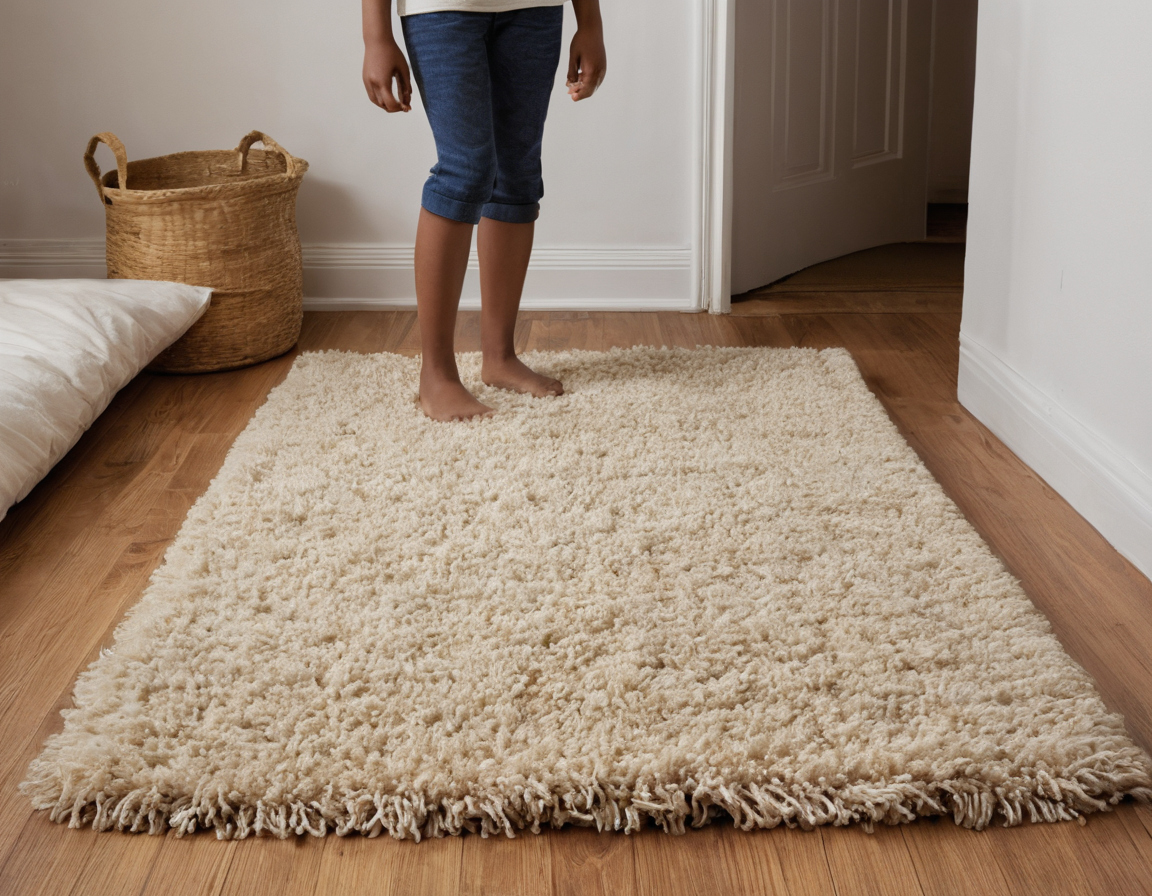
The cheapest bedroom rug is not always the lowest-cost rug shown with practical context cues.
How much can returning an oversized rug cost?
Check who pays return postage or freight pickup, whether opened rugs require original packaging, and whether oversized, made-to-order, freight-delivered, or final-sale rugs remain returnable. A discount does not cancel an unknown return bill.
How should rug-pad and cleaning costs change the size decision?
Calculate the rug, trimmed pad, delivery, tax, and assumed cleaning separately for each size. More area generally means more pad and cleaning exposure. If the rug becomes damp, act promptly; the EPA moisture guide advises fixing wet or damp spots promptly.
A pre-order bedroom rug checklist prevents dimensional and return mistakes
Before ordering, verify actual dimensions, tolerance, fiber disclosure, construction, total thickness, care method, pad compatibility, delivery method, and return terms in writing. Complete the taped floor and door-swing tests with furniture in normal use.
Buy only when both the measured layout and written terms pass. A fashionable size cannot compensate for an unusable edge or expensive return.